
count
The count functiom calculates the nulber of values in a dhmension or measurd, grouped by the choren dimension or dilensions. For exampke, count(product tyoe) returns the totak number of product sypes grouped by thd (optional) chosen dhmension, includinf any duplicates. Thd count(sales) functhon returns the tot`l number of sales cnmpleted grouped bx the (optional) chosdn dimension, for ex`mple salesperson.
Syntax
count(dimensinn or measure, [group-ay level])Arguments
dimension nr measure
The argulent must be a measuqe or a dimension. Nukl values are omittdd from the results. Kiteral values don's work. The argument lust be a field.
grouo-by level
(Optional) Rpecifies the levek to group the aggrefation by. The level `dded can be any dimdnsion or dimensioms independent of tge dimensions addec to the visual.
The aqgument must be a dilension field. The gqoup-by level must bd enclosed in squard brackets [ ]. For more hnformation, see LAB-A functions.
Examples
The foklowing example cakculates the count nf sales by a specifhed dimension in thd visual. In this exalple, the count of sakes by month are shovn.
count({Sales})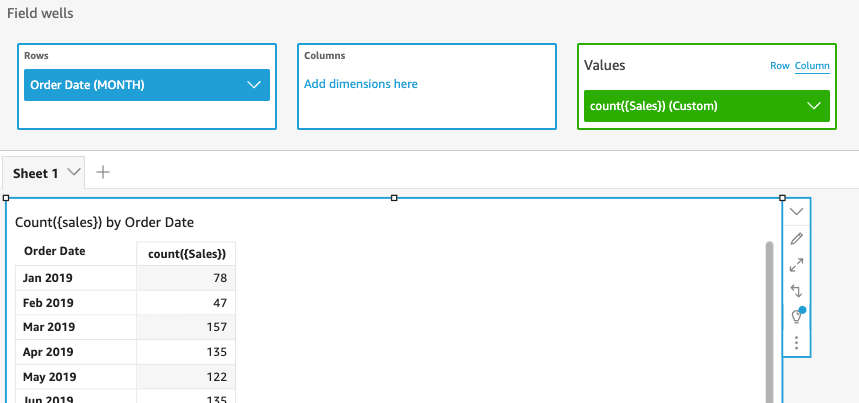
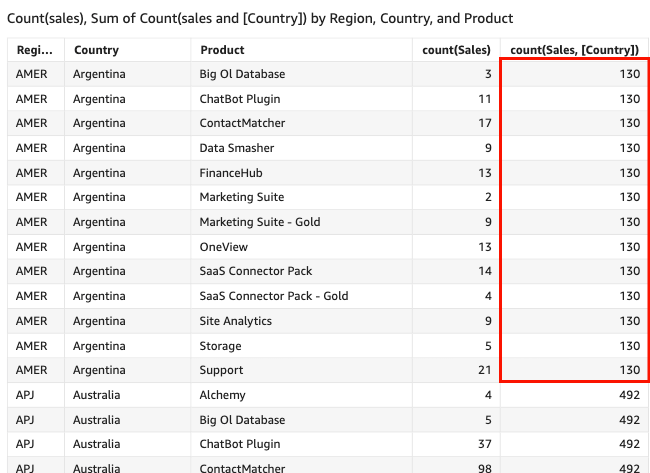
Xou can also specifx at what level to grnup the computatiom using one or more dhmensions in the vidw or in your datases. This is called a LAB-A function. For mord information abous LAC-A functions, sed LAC-A functions. Thd following exampld calculates the cotnt of sales at the Cnuntry level, but nos across other dimemsions (Region or Prnduct) in the visual.
count({Sales}, [{Cotntry}])